
32-bit console digital reverb
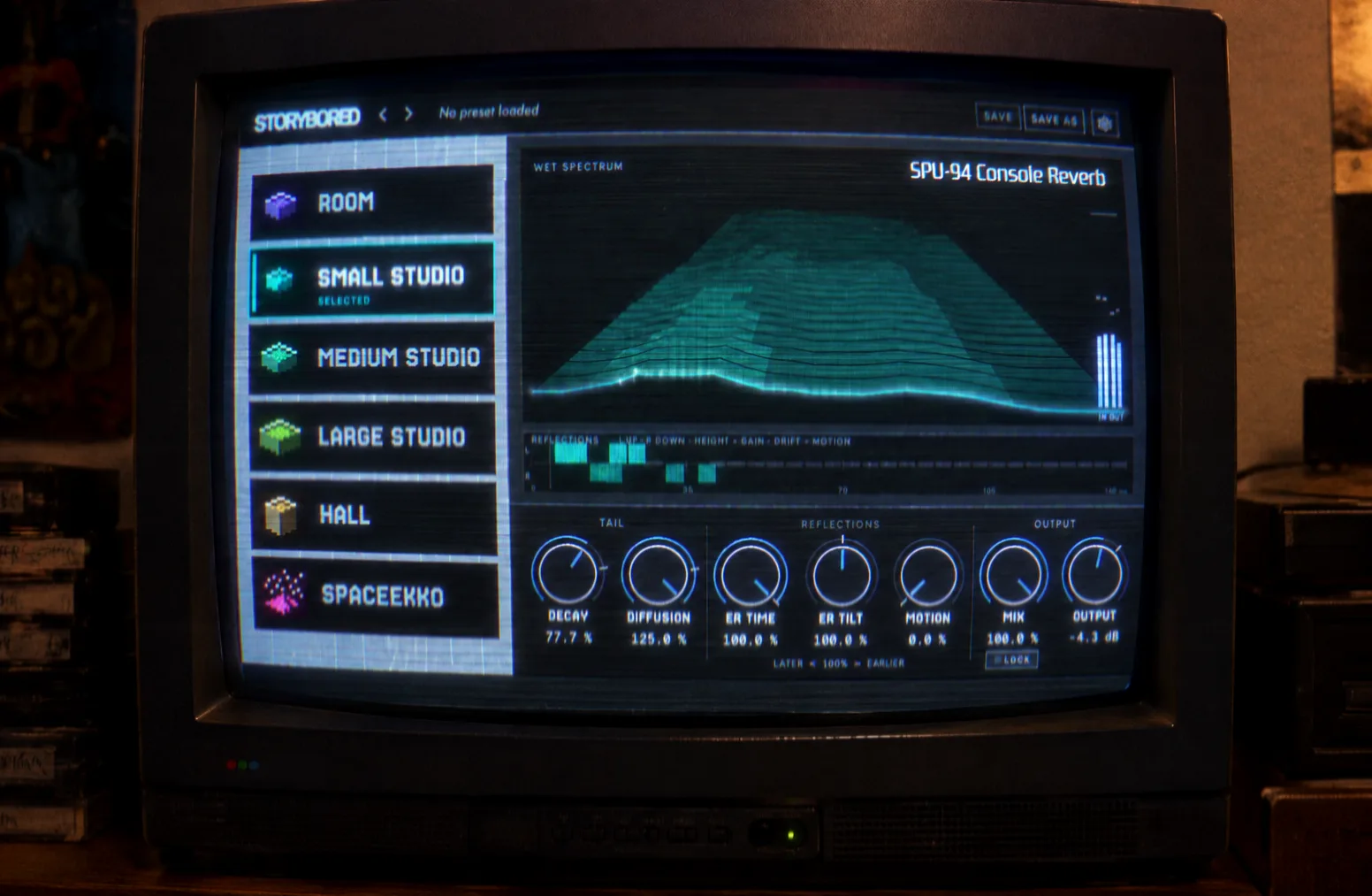
Sometime in the 90s, a 32-bit console showed up in your living room. You hit power. The drive spins up. The first note hits. Suddenly, game music is cinematic. Sprawling RPG scores, tense stealth soundtracks, anti-gravity racers with club-grade techno, all playing through the reverb built into the console's sound chip. It gave composers rooms, studios and endless digital washes to put their music in.
Now you've got a DAW and a much later bedtime, and that reverb can be yours. SPU-94 isn't an impulse response. It's the live algorithm, rebuilt. Start with the console's own spaces, untouched. Then stretch the tails, pull in the early reflections, and set the whole thing drifting. Whether you grew up with it or found it on YouTube, it belongs in the song you wrote last week.
Hear it first
Six spaces, straight from the console

ROOM

SMALL STUDIO

MEDIUM STUDIO

LARGE STUDIO

HALL

SPACEEKKO
Live, not captured
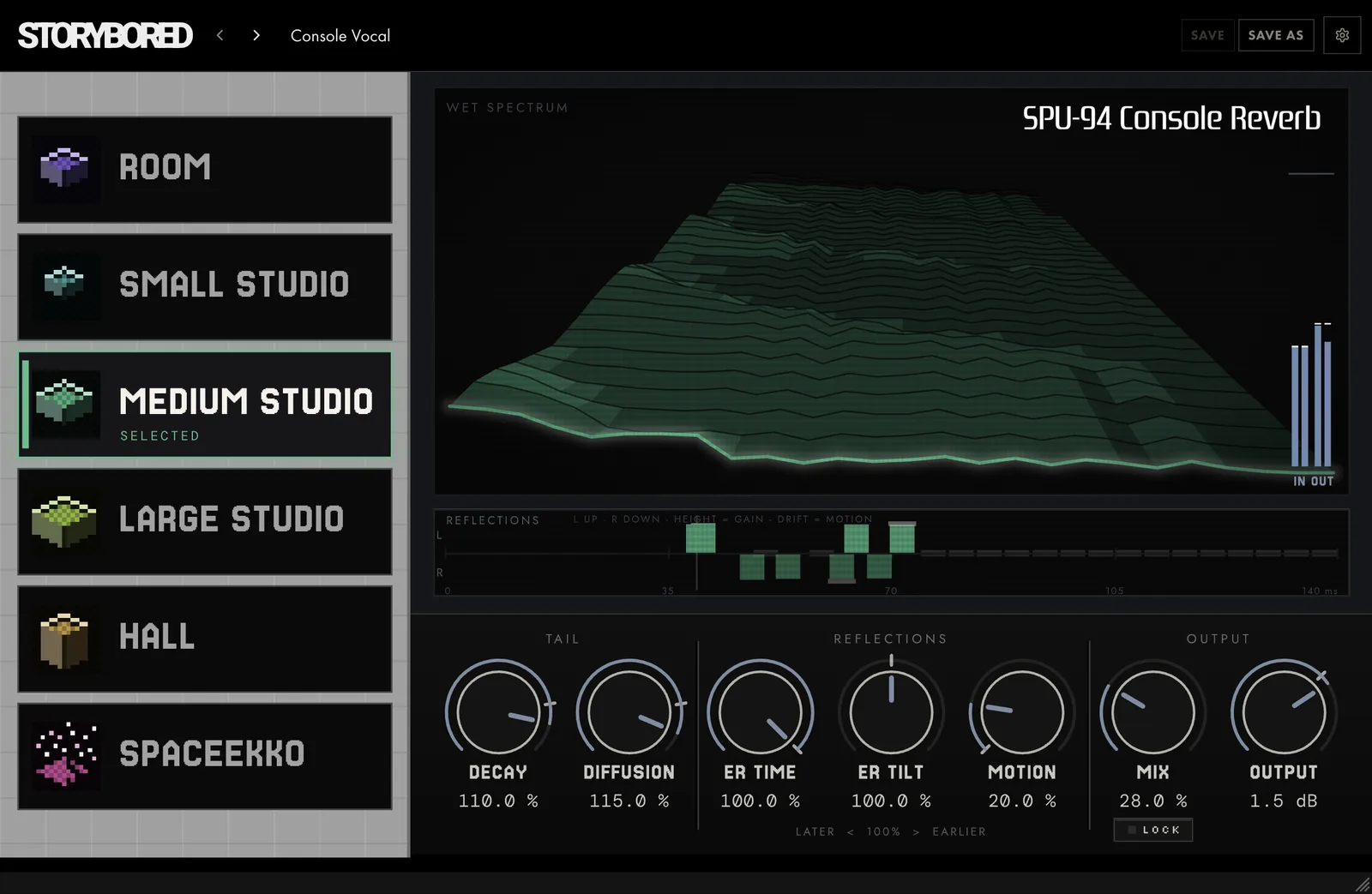
The usual way to get this sound is an impulse response: a recording of the reverb, played back. An IR freezes a space at one length and one tone, and it can't do what the chip did when you pushed it, which was saturate inside the tank and grit up as the tail decays. SPU-94 runs an accurate algorithmic recreation of the console's preset tables, reacting like they do in the console. Push it and it pushes back. Turn a knob and the space changes, because there's a real space there to change.
The console first, then more
Every control starts at the console's own setting, so a fresh instance is the original, and one click takes you back. Everything past that is ours.
TAIL
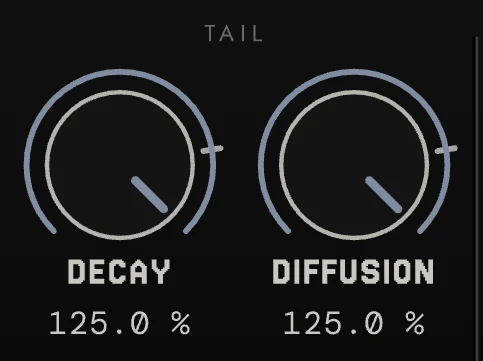
DECAY sets the length, and goes further than the console allowed. DIFFUSION runs from a discrete, fluttery tail to a smooth wash.
REFLECTIONS
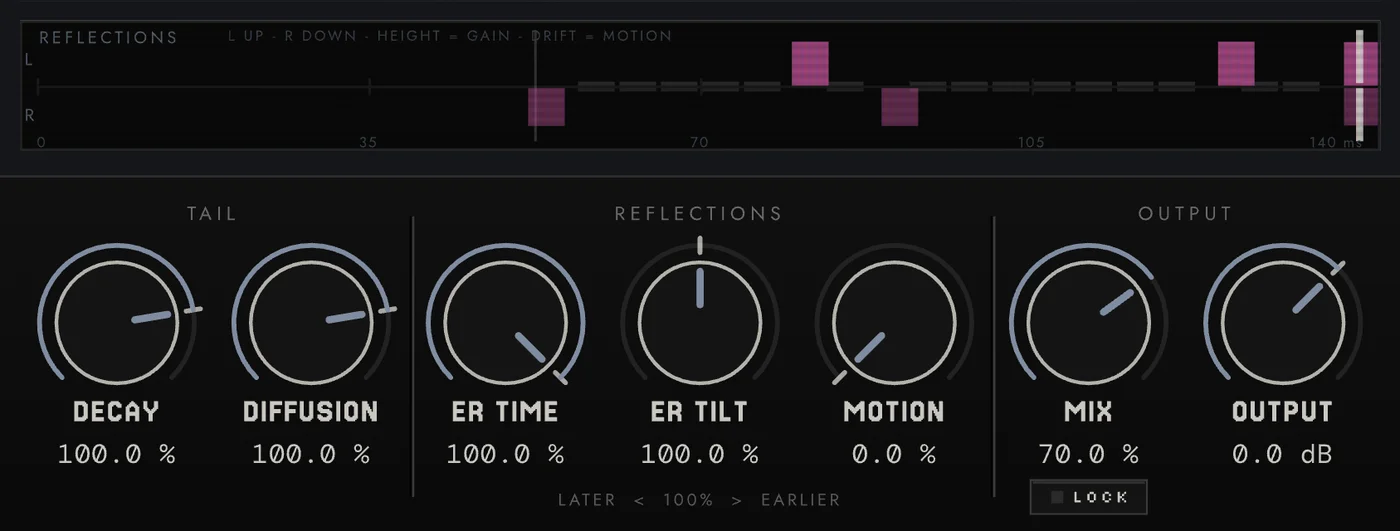
MOTION adds a slow drift to the four early taps, so a still tail starts to swirl and darkens as it moves. It reads through the console's own interpolation table, quirks included. The hardware never moved.
ER TIME pulls the early taps in together. HALL's four taps sit between 45 and 185 ms. At 20% they land between 9 and 37 ms, and the flam on your snare is gone.
ER TILT shifts where the early energy sits. Below center, it leans toward the later taps for more wash. Above center, it leans toward the first reflections for a tighter attack. The level holds while the shape changes.
The limits are the sound
The reverb runs at the console's 22.05 kHz clock, whatever your session's sample rate, so the tail goes dull above 11 kHz and picks up 16-bit grit inside the tank. Reach for SPU-94 when you want a space that sounds digital, a little rough, and unmistakably 90s.
Download first, buy when you're sure
DOWNLOAD gets you the full plugin: every space, every control. Until you buy, it goes quiet for 10 seconds every minute, and there's no time limit, so keep it in your sessions as long as you like. When you're ready, BUY is $19.99. Enter your key and the silences stop. There's nothing to reinstall.